
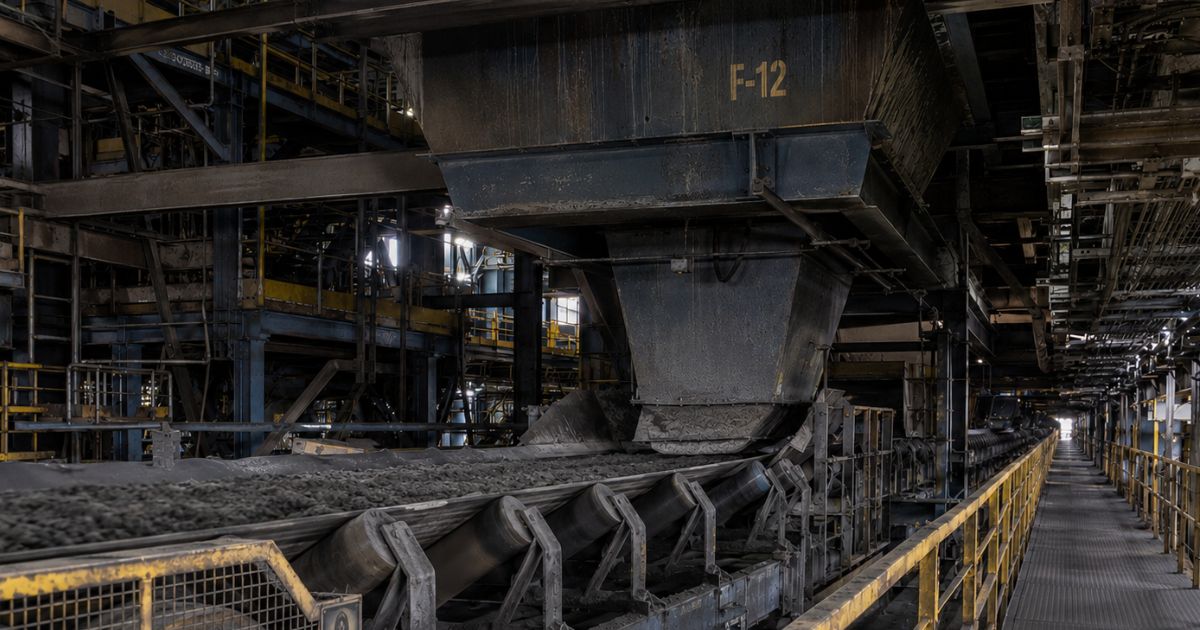
How output is lost long before systems fail
Industrial performance is rarely lost in a single event. It erodes gradually inside plants and operating environments that continue to run, even as their margin for reliability narrows. On paper, production can still appear stable. Targets may still be met. Beneath that surface, the system starts compensating, quietly trading resilience for continuity.
In Africa, many operations are run under constraint, not ideal conditions. Electricity instability is not just an inconvenience; it is a planning factor. Firms report outages as a recurring business-environment reality, and that instability directly disrupts operations and raises costs.
At the same time, spares availability is shaped by logistics reliability: customs, port dwell time, and lead-time dispersion influence whether parts arrive when the maintenance window exists, or after it has already passed. This variability is increasingly amplified by global trade disruption: according to the United Nations Conference on Trade and Development (UNCTAD), major shipping disruptions have reduced capacity in key routes and extended transit times by 20–30% in recent periods, directly affecting delivery predictability into African ports.
When systems cannot rely on stability, they adapt. The adaptation is rarely strategic. It is operational.
Maintenance is deferred to protect output. Components stay in service beyond their optimal life because replacement is not immediately available. Temporary fixes become extended solutions. Operators adjust processes to work around constraints rather than remove them. Each local decision makes sense. Collectively, they embed risk.
This is how performance begins to leak away, long before a “failure event” forces attention.
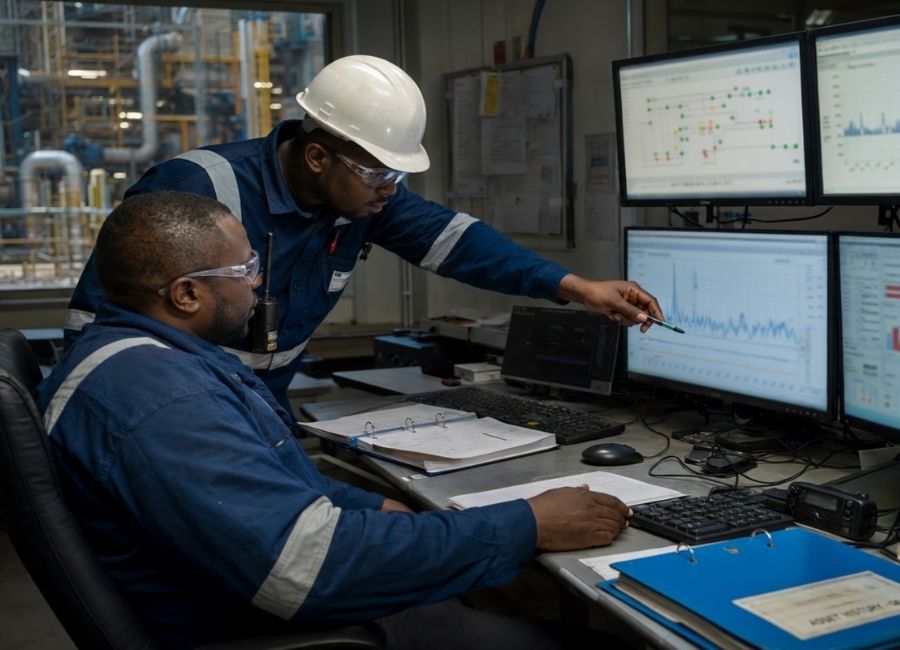
The first leak is hidden operating volatility
Power instability not only creates downtime. It forces process compromise. Plants recalibrate. Control loops are tuned around noise. Equipment is restarted more often than designed. The process can still produce, but usually at a cost: more wear, more variation, more quality drift, and a stronger dependence on operator workarounds.
The most dangerous aspect is familiarity. When instability becomes normal, compensation becomes competence. The plant does not feel “at risk”; it feels “managed.” This is the same mechanism safety research describes as drift and normalisation: repeated deviation without immediate consequence resets what people perceive as acceptable.
The second leak is spares lead-time risk converted into asset-life risk
A common pattern in constrained environments is the silent cost of delay. A component that should be replaced in days takes weeks to arrive. The plant does not stop in those weeks; it stretches the asset’s remaining life and hopes the next window holds.
This is not poor discipline. Often, it is rational triage. But the compounding effect matters: repeated “just extend until the next planned stop” decisions slowly turn reliability into a structural question: is the system still operating within tolerance, or being pushed outside it? Global supply chain volatility reinforces this pattern: the World Bank Logistics Performance Index highlights that lead-time variability, not just average delay, has become a defining constraint, with unpredictability at ports and borders now a primary driver of missed maintenance windows.
In practice, the system restarts after a constrained shutdown with a new, unofficial set of assumptions: what was not replaced; what was inspected but not corrected; what was “temporarily” repaired; what was substituted because the correct component did not arrive. Over time, the plant’s real operating model diverges from its designed model, and the organisation often has no clean record of when that divergence became material.
The third leak is shutdown compression and the quality-of-work penalty
A late part or a delayed contractor not only shifts the schedule, but it also compresses what can realistically be done. Tasks get resequenced. Inspections narrow. “Nice-to-have” work gets dropped. Craft time is used where failure feels most imminent, not where risk is most structurally expensive. This is how backlogs grow, and how plants accumulate latent defects.
Work management disciplines exist precisely to prevent this from becoming invisible. In maintenance best practice, backlog is not just “work not done”; it is a measure of whether capacity, planning, and prioritisation remain matched to the real condition of the assets.
A mining example shows the trade-off clearly
A conveyor gearbox or bearing is scheduled for replacement during a narrow downtime window. The part arrives late. The plant faces a choice: extend downtime and take the commercial hit, or restart and carry the risk until the next window.
In the short term, restarting can be defensible, especially when downstream production targets and contract obligations are non-negotiable. But over time, repeated decisions of this kind create a fragile operating posture: resilience turns into a question of luck, not design.
The hidden cost often appears later, not as a single breakdown headline, but as sustained leakage: slower running speeds, higher vibration, more minor stops, more rework, more short maintenance interventions, and more unstable throughput. Many organisations only recognise the full cost when they measure effectiveness properly, through availability loss, speed loss, and quality loss, not only “did it break.”
What matters is not only failure, but drift
Drift is what happens when systems remain operational while reliability is quietly traded away. It explains why recovery is rarely immediate once the problem becomes visible: the plant has been compensating for so long that deviation feels normal, until it becomes unmanageable.
This is also why resilience is not built during a crisis. It is built earlier, through the decisions leaders make long before failure:
- What is replaced early, and what is allowed to run to the edge?
- What is inspected properly, and what is only visually checked?
- What is carried as a critical spare, and what is ordered only when needed?
- What is documented as an engineered solution, and what is tolerated as a temporary fix?
The discipline here is governance, not heroics. Asset management standards explicitly frame decision-making as balancing value, risk, and lifecycle performance, not simply reducing immediate cost.
Plant resilience check: the questions that expose drift early
Before approving the next shutdown plan, spares budget, or production ramp-up, plant leadership should be able to answer:
- Which assets are currently “running on borrowed time” because parts did not arrive in the last planned window?
- Where has “temporary” work become structural, and is it engineered, documented, and re-risked?
- What proportion of maintenance work is planned versus reactive, and is backlog stable, shrinking, or silently expanding?
- Which failure modes are being actively monitored through condition monitoring, rather than discovered at failure?
- Where is process stability being “manufactured” by operator workarounds, rather than ensured by system stability?
- What would have to be true for leadership to choose downtime now rather than absorb risk until later, and has that trigger been defined?
If these answers are unclear, drift risk already exists.
What disciplined operations do differently
In constrained industrial environments, resilience is not the absence of problems; it is the presence of deliberate policies that keep problems governable.
High-performing plants typically make three choices earlier than others:
They decide which assets will be protected with high certainty through critical spares, clear replacement thresholds, and condition monitoring because those assets are throughput-critical. Condition monitoring standards exist for exactly this reason: to establish programmes that detect degradation early and trigger action before failure.
They formalise failure management policies, what is prevented, what is detected, what is run-to-failure, rather than improvising them under pressure, consistent with Reliability-Centred Maintenance logic.
They treat downtime as an economic decision, not an embarrassment. The cost of downtime is often material enough to justify sophistication, but the point is not to eliminate downtime; it is to prevent uncontrolled downtime and sustained effectiveness loss that accumulates unnoticed.
Closing
Performance is rarely lost in a single moment of failure. It fades while systems continue running, through workarounds, compressed shutdowns, spares that arrive late, and maintenance decisions made under pressure. In that sense, resilience is not an abstract aspiration. It is a practical discipline built in advance: measurable, governable, and led deliberately.
____________________
Follow African Legacy News on LinkedIn for more insight into Africa’s business, industrial and leadership landscape.