
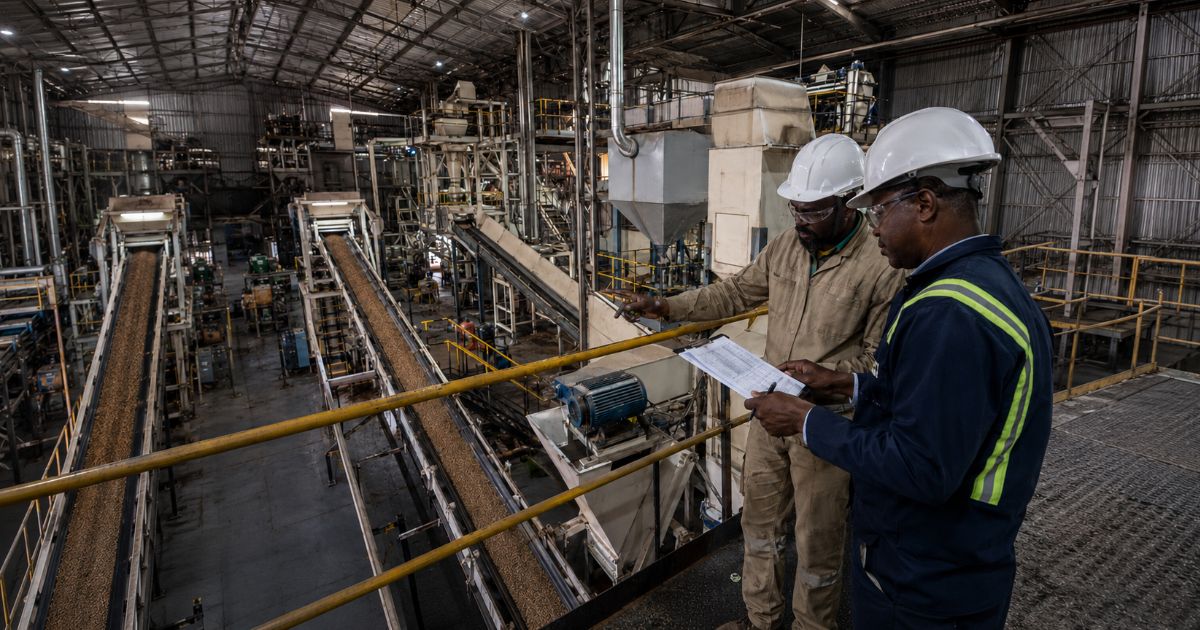
How industrial environments are quietly recalibrating around constraint, continuity, and operational discipline.
Across many industrial environments, instability is no longer being treated as a temporary interruption to otherwise predictable operating conditions. Increasingly, it is being absorbed into planning assumptions themselves.
Maintenance cycles are adjusted around uncertain procurement timelines. Asset replacement is delayed in favour of refurbishment and lifecycle extension. Operational buffers narrow gradually while continuity expectations remain high.
The shift is rarely dramatic enough to announce itself clearly. More often, it becomes visible through changes in behaviour.
Shutdown schedules become more tightly coordinated around parts availability and production timing.
Equipment remains in operation longer than originally intended. Maintenance planning begins to carry greater operational weight. Engineering decisions increasingly account for procurement uncertainty, throughput pressure, and constrained redundancy at the same time.
In many sectors, industrial systems are not necessarily becoming weaker. They are becoming less flexible.
This distinction matters because flexibility has historically allowed industrial environments to absorb disruption without immediately compromising output. Redundancy, inventory availability, predictable maintenance windows, and stable supply chains created operational space within which systems could continue functioning even when conditions became difficult.
That space has narrowed.
Across infrastructure, processing, manufacturing, logistics, and heavy industrial environments, operators are increasingly being required to sustain continuity with tighter margins for disruption than many systems were originally designed around. Delays carry wider operational consequences. Maintenance decisions influence throughput more directly. Procurement timelines shape operational planning earlier than before. Smaller interruptions now have a greater tendency to spread across interconnected systems.
Under these conditions, industrial behaviour begins changing gradually.
Asset life extension becomes more economically significant than accelerated replacement cycles. Refurbishment environments carry greater strategic importance. Maintenance scheduling becomes increasingly integrated into operational planning rather than functioning separately from it. Visibility across systems, inventories, and operational dependencies becomes more valuable because predictability itself begins carrying operational weight.
This is particularly visible inside maintenance environments. Historically, maintenance often operated primarily as a support function behind production. Increasingly, however, reliability planning, refurbishment capability, inspection discipline, and recurring failure analysis are becoming more tightly connected to sustained operational performance itself.
In many environments, the ability to maintain stable output depends as much on how effectively systems are sustained between failures as on the systems themselves.
The same shift is visible across throughput environments.
Conveying systems, transfer infrastructure, processing lines, intake environments, and broader movement systems are carrying increasing operational significance because production continuity now depends more heavily on coordinated flow across interconnected operations. Where redundancy narrows, coordination becomes increasingly important. Throughput instability that may once have remained isolated now carries greater potential to affect wider operational performance.
This does not necessarily represent industrial decline. Nor does it suggest dramatic transformation.
Rather, it reflects a quieter recalibration taking place across operational environments, adapting to prolonged constraint.
The emphasis begins shifting subtly:
- from expansion toward sustainment
- from replacement toward extension
- from redundancy toward coordination
- from operational flexibility toward operational predictability
In many cases, these adjustments emerge gradually enough to appear unremarkable in isolation. Yet collectively, they suggest industrial priorities are evolving around a different set of operating assumptions than many organisations historically planned against.
This is also influencing leadership behaviour.
Operational decisions increasingly involve sequencing exposure rather than eliminating risk entirely. Procurement uncertainty influences maintenance timing. Throughput pressure affects shutdown planning. Asset replacement decisions become more closely tied to lifecycle extension capability and operational forecasting.
Industrial leadership, in many environments, becomes less associated with acceleration and more associated with preserving continuity without allowing accumulated pressure to compromise wider system stability.
Much of this adjustment remains largely invisible outside industrial environments themselves.
Production continues. Material continues moving. Facilities remain operational. Yet beneath visible output, systems are increasingly being managed around tighter operational margins, reduced flexibility, extended infrastructure cycles, and a growing dependence on disciplined coordination across interconnected environments.
The signals themselves rarely appear dramatic.
They appear gradually through planning decisions, maintenance priorities, procurement behaviour, throughput management, and the growing operational value attached to predictability itself.
Across many industrial environments, the shift now underway is less about transformation than adaptation. Systems are continuing to function, but increasingly through recalibration around continuity, constraint, and operational discipline.