
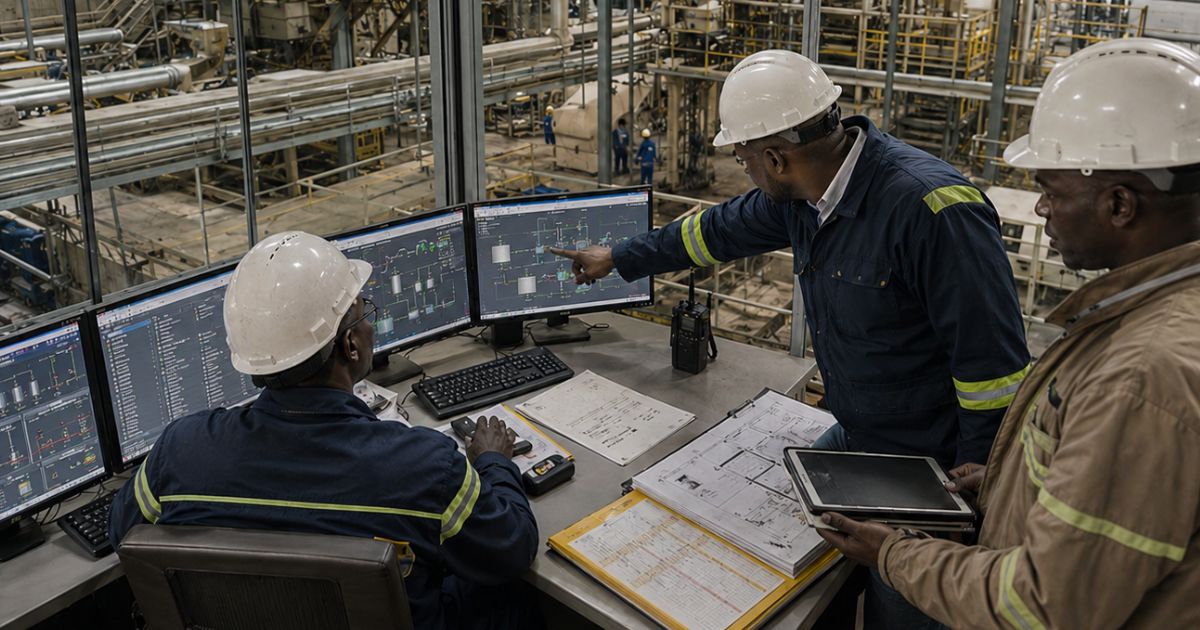
In many industrial environments, pressure rarely arrives as a single event.
More often, it accumulates gradually across maintenance schedules, procurement delays, production targets, shutdown planning, and operational decisions made under increasingly constrained conditions. Systems continue operating, but with less flexibility than before. Equipment remains online longer than originally intended. Maintenance windows narrow. Replacement timelines stretch. Decisions that once carried manageable operational consequences begin influencing continuity much more directly.
Within these environments, leadership increasingly becomes less about optimisation and more about managing instability without allowing it to spread.
Across large parts of Africa’s industrial economy, this shift is becoming increasingly visible. Infrastructure pressure, energy instability, logistics disruption, supply-chain volatility, and ageing operational systems are forcing industrial leaders to sustain performance inside conditions that no longer resemble ideal operating environments. In sectors such as mining, manufacturing, processing, utilities, and heavy industry, operational stability often depends on decisions being made long before systems show visible signs of failure.
The challenge is not always dramatic. In many cases, it unfolds quietly across ordinary operational routines.
A shutdown is delayed to maintain throughput commitments. Equipment remains in service while replacement components are still in transit. Maintenance schedules are compressed around production demand. Procurement teams balance escalating lead times against operational urgency. Supervisors absorb pressure from multiple directions simultaneously: production targets, maintenance requirements, operational risk, staffing constraints, and operational expectations that leave little room for interruption.
Over time, these pressures begin reshaping how operational judgement itself is exercised.
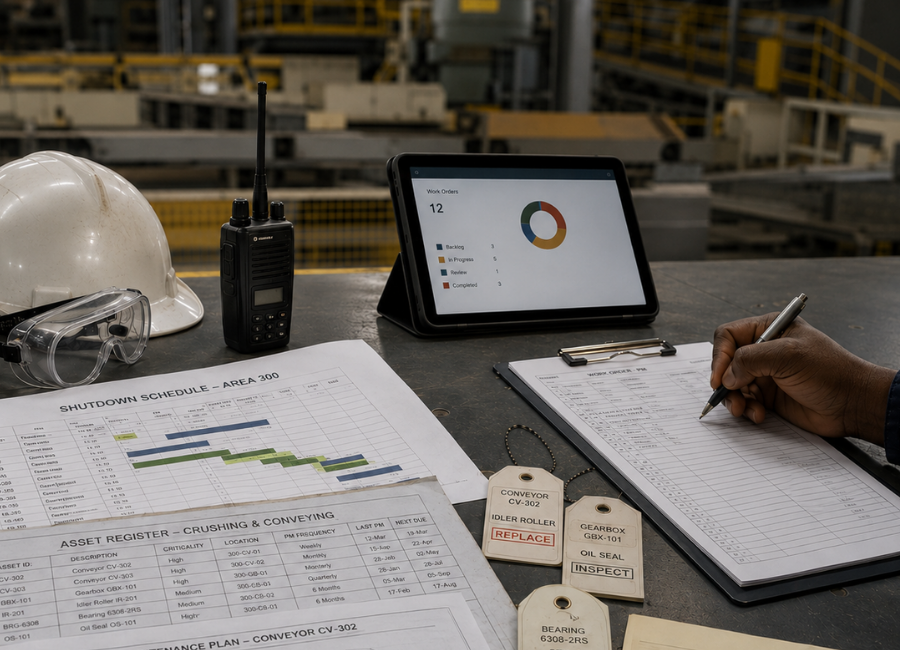
Under constrained conditions, industrial leadership often becomes an exercise in prioritisation rather than certainty. Not every system can receive immediate intervention. Not every component can be replaced within ideal timelines. Not every operational risk can be removed completely without introducing pressure elsewhere inside the production environment. Decisions increasingly involve managing degrees of exposure while attempting to preserve stability across interconnected systems already operating under strain.
This is particularly visible inside maintenance environments.
Historically, maintenance planning often operated around predictable shutdown cycles, stable procurement timelines, and clearer operational redundancy. Increasingly, however, industrial teams are being required to maintain output consistency while navigating delayed supply chains, reduced inventory buffers, compressed maintenance windows, and infrastructure environments carrying years of accumulated operational pressure.
The result is that leadership decisions become more tightly connected to system stability itself.
A delayed intervention may protect short-term throughput while increasing longer-term system risk. Accelerated production targets may place additional strain on already constrained infrastructure. Extended operating cycles may preserve stable operation temporarily while reducing maintenance flexibility later. Under these conditions, industrial leadership increasingly depends on understanding how pressure moves through systems over time rather than focusing only on immediate operational outcomes.
This creates a different kind of leadership environment from the one many industrial organisations historically operated within.
The pressure is often cumulative rather than sudden. Teams continue functioning. Production continues moving. Maintenance continues to be scheduled and rescheduled around operational demand. Yet beneath visible stability, organisations may be operating with progressively narrower margins for disruption. Small operational setbacks begin carrying wider consequences because redundancy, flexibility, and response time are no longer as readily available as before.
The psychological burden attached to these environments is rarely discussed directly, but it remains present throughout industrial operations under sustained pressure.
Supervisors, maintenance planners, plant managers, and operational leaders are frequently required to make decisions where the ideal technical outcome is not always immediately achievable within existing operational constraints. Instead, judgement increasingly centres on sequencing risk, protecting continuity, managing exposure, and preventing instability from escalating into larger operational failure.
In many cases, the success of these decisions remains largely invisible. Production targets continue to be met. Material continues moving through systems. Equipment remains operational, and facilities continue functioning. Yet much of this stability depends on operational judgement being exercised continuously across maintenance schedules, procurement timelines, staffing limitations, shutdown coordination, and infrastructure conditions that require constant balancing.
This is one reason industrial continuity increasingly depends not only on systems themselves, but on the quality of the decision-making surrounding them.
Across many sectors, leadership is becoming less associated with expansion alone and more associated with the ability to sustain stable operation under imperfect conditions. Operating environments are becoming less predictable. Lead times fluctuate. Infrastructure ages unevenly. Throughput expectations remain high. Operational interruptions carry increasing commercial consequences.
Under these conditions, leadership becomes closely tied to the ability to maintain continuity without allowing accumulated pressure to compromise the wider operating environment. Much of this work remains largely unrecognised outside industrial systems themselves. Yet across plants, processing facilities, workshops, logistics environments, and infrastructure operations, operational leaders continue making the decisions that prevent instability from spreading beyond manageable limits.
In constrained industrial environments, continuity increasingly depends on judgement exercised long before failure becomes visible.
____________________
Follow African Legacy News on LinkedIn for more insight into Africa’s business, industrial and leadership landscape.