
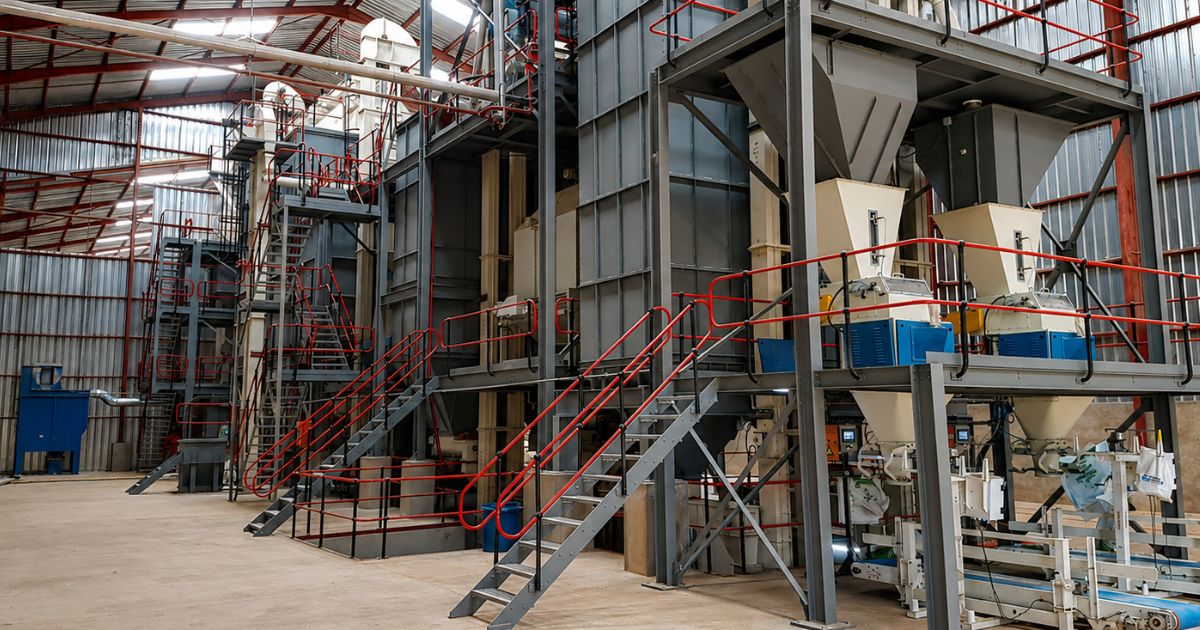
Industrial systems rarely lose performance all at once.
More often, instability begins gradually between production stages. Intake systems slow unevenly. Transfer points carry inconsistent loads. Material backs up intermittently across conveyors, hoppers, elevators, and processing lines. Throughput continues, but less smoothly than before.
Delays accumulate quietly between otherwise functional systems, introducing friction into environments that depend on stable movement to remain commercially viable.
In high-throughput industrial operations, interruption does not always arrive as a complete stoppage. It often emerges first through imbalance.
Across Africa’s industrial economy, that imbalance is becoming increasingly difficult to absorb. Agricultural processors, food producers, and industrial handling environments are being required to move larger volumes through constrained logistics, energy, and maintenance conditions. Production systems face rising pressure to maintain consistency despite procurement volatility, maintenance compression, fluctuating intake volumes, and wider supply-chain uncertainty.
Under these conditions, industrial performance depends not only on what a facility can produce, but on how effectively material continues moving through the system itself.
The consequences of interrupted flow extend far beyond isolated handling inefficiencies. A delayed intake process may begin affecting downstream cleaning and grading stages. Inconsistent transfer rates can create instability across blending, storage, drying, packaging, and dispatch operations.
Material congestion introduces additional wear into handling equipment while increasing operational pressure on maintenance and production teams attempting to sustain throughput under constrained conditions.
In many processing environments, these losses accumulate gradually enough to become operationally normalised.
This is particularly visible across agri-processing environments, where throughput stability often determines not only production efficiency, but product integrity itself. Grain damage, inconsistent cleaning, transfer disruption, excessive handling, contamination risk, dust, and material loss all begin influencing downstream performance long before complete interruption occurs.
In these systems, movement is not separate from productivity. It is one of the conditions that enable it.
The challenge becomes more significant when facilities are required to sustain output through ageing infrastructure, compressed turnaround windows, or unpredictable operating environments. Under pressure, systems frequently compensate for restricted flow through temporary adjustments that resolve immediate bottlenecks while introducing strain elsewhere in the process chain.
Over time, these inefficiencies begin affecting wider production stability. This is where material handling infrastructure becomes strategically significant.

Where movement becomes performance
Facet Engineering operates in this layer of industrial sustainment, where throughput depends less on isolated machinery and more on the coordination of movement across the full process chain.
Founded in 1989, the company’s work has developed from conveyor design into broader agri-processing and process-engineering environments, including intake systems, cleaners, bucket elevators, blending systems, conveying infrastructure, and turnkey processing plants. Its relevance in this context lies not simply in the equipment supplied, but in the way coordinated systems help preserve product movement, process stability, and operational continuity.
This is particularly important in agri-processing environments, where material flow directly affects product quality. Uneven intake, excessive handling, poor transfer alignment, dust, contamination risk, or inconsistent cleaning can begin influencing grading accuracy, storage quality, waste, and downstream dispatch long before a complete stoppage occurs.
Many of the sectors Facet supports depend heavily on stable material transfer to maintain operational performance. Agricultural processing environments, in particular, require careful coordination between intake, cleaning, conveying, storage, blending, and packaging systems in order to sustain both throughput and product quality simultaneously.
A single inefficiency inside the process chain can begin affecting performance across multiple downstream stages.
Under these conditions, throughput becomes less about isolated equipment performance and more about how effectively systems operate together. This requires a different level of engineering coordination than conventional equipment supply alone.
Conveyor systems, elevators, cleaners, aspirators, and blending infrastructure must operate within production environments where timing, transfer consistency, material condition, and throughput demand continuously interact.
The operating environments themselves add further complexity.
Across agricultural and industrial processing sectors, systems are often required to manage variable material conditions, changing moisture levels, abrasive product movement, contamination risk, dust generation, and fluctuating intake volumes simultaneously.
In large-scale grain, seed, maize, citrus, and dry bean processing environments, throughput instability can quickly begin affecting grading consistency, storage conditions, handling losses, and operational stability more broadly.
Maintaining flow under these conditions depends heavily on process coordination, layout efficiency, transfer reliability, and the ability to minimise unnecessary interruption across the wider operating environment.
Continuity depends not only on capacity, but on coordination.
The discipline of coordinated flow
Facet Engineering’s experience across integrated processing systems reflects this operational reality.
Much of the company’s work is concentrated in environments where production continuity depends on carefully coordinated movement between multiple handling and processing stages, rather than isolated machinery operating independently.
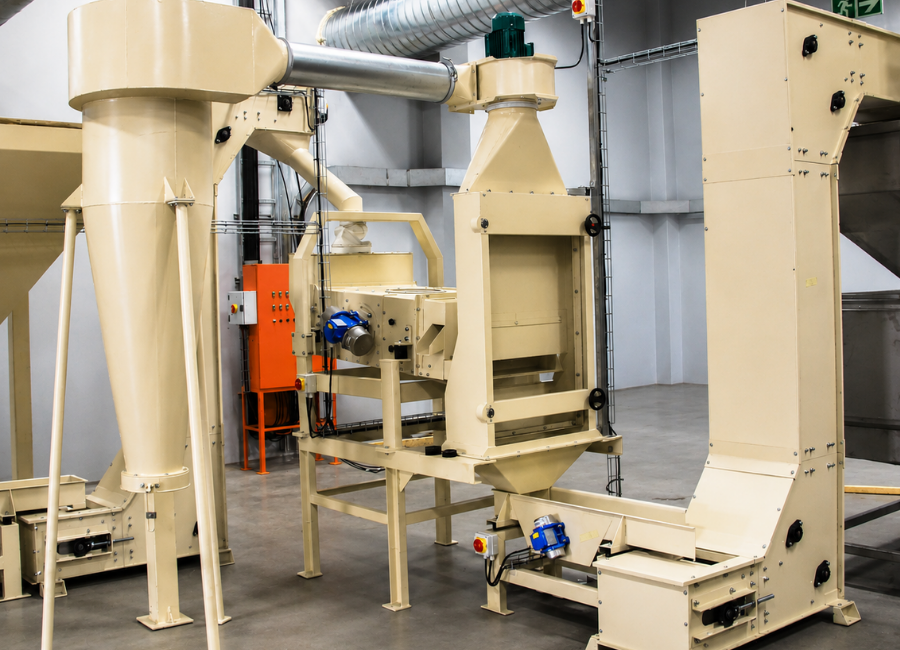
This includes conveying systems, grain intake infrastructure, cleaners, bucket elevators, blending systems, and fully integrated processing plants designed around long-term throughput stability.
Under these conditions, uninterrupted movement through processing environments becomes central to preserving productivity, reducing waste, and limiting the wider consequences of throughput instability.
This is why layout decisions carry strategic weight.
A conveyor is not only a conveyor when it determines the rate at which material reaches a cleaner, grader, dryer, storage point, or packaging line. An intake system is not only an entry point when uneven flow begins shaping downstream stability.
A bucket elevator is not only a vertical transfer mechanism when its reliability influences the rhythm of the wider plant. In high-volume operations, small inefficiencies can become system-wide constraints.
Movement must therefore be understood as part of the operating architecture of the facility. Each transfer point, elevation change, storage interface, and processing stage either supports coordinated flow or introduces friction into the system.
When coordination is strong, material moves with enough consistency to protect productivity. When coordination weakens, instability rarely stays in one place. It travels.
It shows up in delayed intake, uneven loading, unnecessary handling, rising wear, inconsistent cleaning, increased waste, and greater pressure on teams expected to maintain output under constrained conditions.
What flow instability often signals
Flow disruption is rarely only a handling issue. In agri-processing and material-handling environments, repeated bottlenecks may point to deeper system conditions that affect throughput, product quality, and yield.
Common signals include:
- uneven intake rates
- transfer-point congestion
- inconsistent conveyor loading
- excessive product handling
- grain or product damage
- reduced cleaning or grading consistency
- dust or contamination risk
- storage imbalance
- rising equipment wear
- packaging or dispatch delays
Throughput is protected when material movement remains coordinated across the full process chain.
From equipment supply to process continuity
In constrained industrial environments, engineering decisions carry consequences beyond mechanical performance alone.
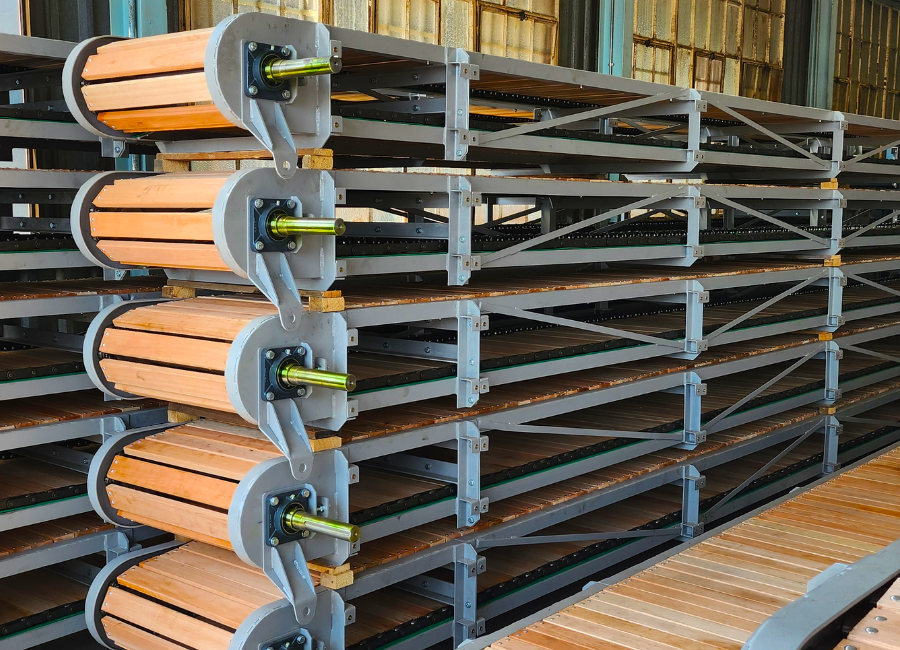
Layout design influences transfer efficiency. Material handling accuracy affects downstream product quality. Conveyor stability shapes adjacent processing stages. Even small inefficiencies inside movement systems can become wider production constraints when sustained across high-volume operations.
This is why industrial continuity increasingly depends on coordination rather than capacity alone.
For processing environments, the question is not only whether equipment has enough capacity on paper. It is whether intake, transfer, cleaning, storage, blending, and dispatch can remain aligned when material conditions fluctuate, maintenance windows compress, and production expectations remain high.
This is where companies such as Facet Engineering become more strategically relevant. Their role is not defined only by the equipment installed, but by the continuity that coordinated systems help preserve.
When projects extend beyond individual equipment supply into plant design, fabrication, installation, commissioning, and operational handover, throughput stability is shaped long before equipment begins running. It is shaped by layout decisions, transfer logic, material behaviour, plant integration, and the ability to anticipate how one stage of the process will affect the next.
In these environments, stable movement protects more than output. It protects product integrity, planning accuracy, equipment life, and the operating rhythm on which commercial performance depends.
Closing
Industrial performance is often measured at the point of output. Yet in processing environments, that output is shaped much earlier by the way material moves through the system.
Before production slows, flow often becomes uneven. Before dispatch is delayed, transfer may already be unstable. Before quality is affected, handling may already be introducing friction into the process chain.
That is why throughput continuity depends on more than capacity.
It depends on coordination: the ability to keep intake, movement, processing, storage, and dispatch aligned closely enough that instability does not spread across the wider operating environment.
Africa’s industrial future will require new capacity, stronger infrastructure, and continued investment. But in environments where material must keep moving, durable performance will also depend on the disciplines that sit between production stages.
- The conveyor that feeds consistently.
- The intake system that absorbs fluctuating volume.
- The layout that reduces unnecessary handling.
- The transfer point that protects product integrity.
- The integrated process chain that prevents small delays from becoming wider instability.
These are not secondary engineering details. They are part of the operating foundation that allows high-throughput environments to keep performing under pressure.
In this cycle, continuity depends not only on capacity. It depends on coordination.
____________________
For more information about Facet Engineering and its work in conveying, process engineering and turnkey plant solutions, visit Facet Engineering.
Follow African Legacy News on LinkedIn for more insight into Africa’s business, industrial and leadership landscape.