
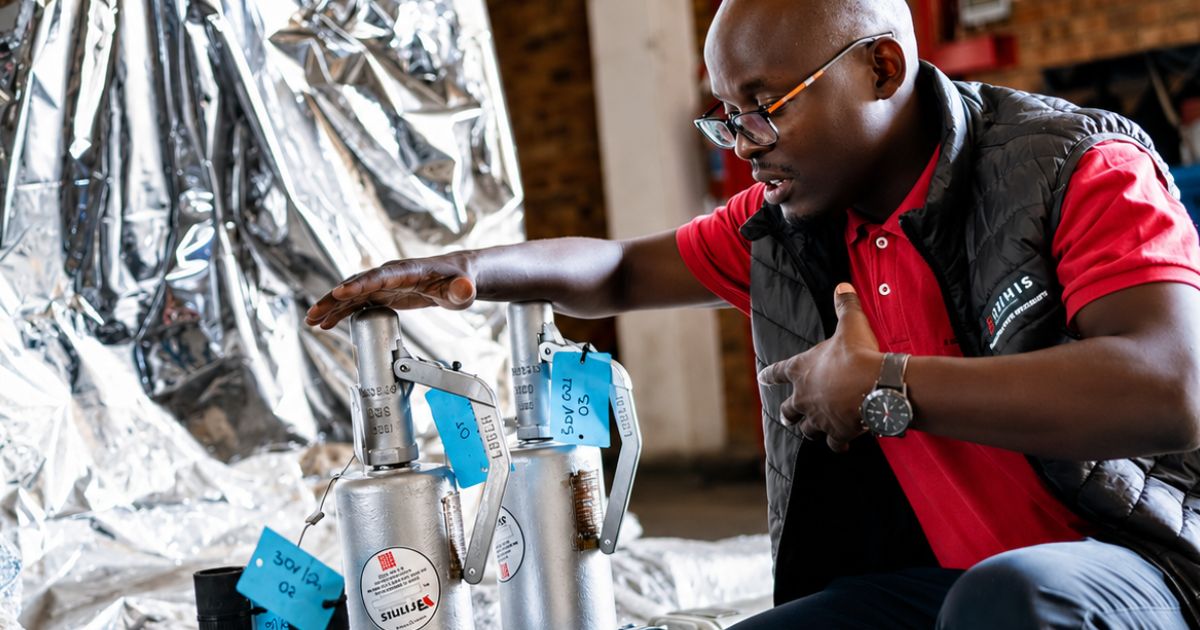
Why reliability, refurbishment, and disciplined engineering control are becoming central to industrial continuity.
Industrial systems rarely fail at the point where failure first becomes visible.
Long before a stoppage occurs, operating conditions begin shifting away from their intended state. Vibration increases incrementally. Maintenance intervals shorten. Components return repeatedly for repair. Operators compensate for declining performance while production schedules continue to demand output from systems already operating under strain.
In many industrial environments, this deterioration unfolds slowly enough to become normalised.
Across Africa’s industrial landscape, facilities are increasingly being required to sustain throughput under conditions they were not originally designed to carry indefinitely. Ageing infrastructure, compressed shutdown windows, procurement delays, skills shortages, and long lead times on critical equipment are placing sustained pressure on operational continuity.
In sectors such as mining, water infrastructure, power generation, and process environments, the question is often no longer expansion alone. It is whether existing systems can continue performing reliably while carrying years of accumulated operational demand.
The consequences of this pressure rarely appear in isolation.
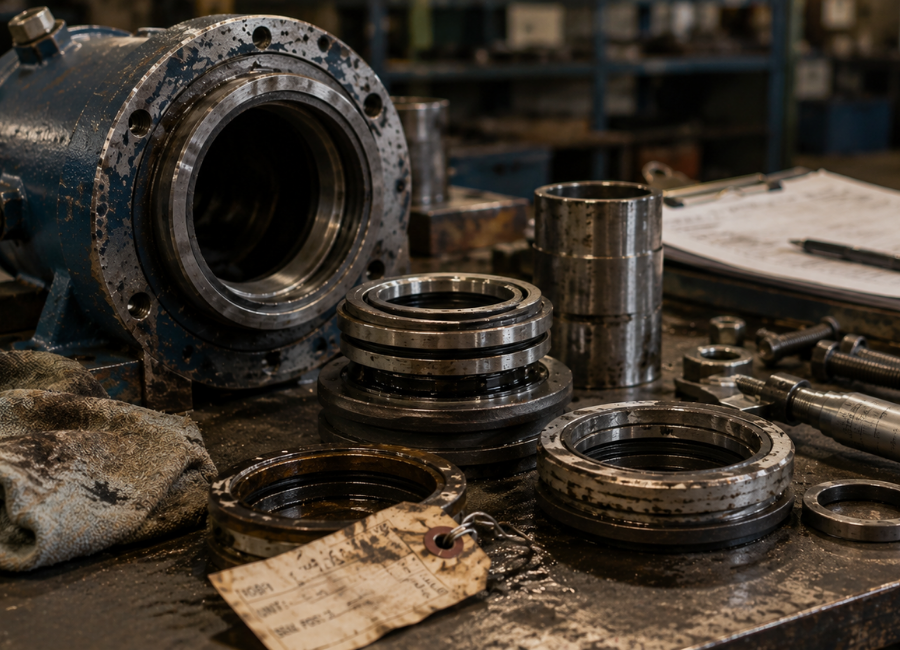
Mechanical degradation compounds quietly across interconnected systems. A recurring seal failure may initially appear contained. Misalignment may seem manageable within existing tolerances. Heat, imbalance, corrosion, abrasive wear, or reduced flow efficiency may be addressed temporarily through repeated intervention while production continues around them.
Yet over time, these conditions begin influencing reliability more broadly, increasing maintenance frequency, reducing efficiency, and introducing instability into environments that depend on continuity.
Under these conditions, repeated breakdowns are often less significant than repeated patterns.
Industrial maintenance therefore becomes less about isolated repair activity and more about understanding how deterioration progresses through operating systems over time. The strategic question is not only whether equipment can be returned to service. It is whether the conditions that caused the failure have been identified, controlled, and prevented from becoming a recurring operational cycle.
Within rotating equipment environments, recurring intervention can become expensive long before catastrophic failure occurs.
Pumps, valves, and associated systems may continue functioning while underlying conditions steadily erode reliability beneath the surface. The cost is not always immediate downtime alone. It often appears gradually through shortened asset life, compressed maintenance schedules, production interruptions, recurring workshop returns, inconsistent performance, and increasing pressure on maintenance teams attempting to sustain continuity inside constrained environments.
Increasingly, the challenge is not simply restoring operation after failure. It is understanding why systems repeatedly return to failure conditions in the first place.
Where repair becomes continuity
Brimis Engineering operates within this layer of industrial sustainment.
Across power generation, mining, water infrastructure, and process environments, the company’s work spans the supply, installation, maintenance, refurbishment, and lifecycle support of pumps, valves, and related systems. Its role sits close to the operating backbone of industry, where mechanical reliability directly influences production continuity, service delivery, and infrastructure resilience.
The significance of this work lies not only in repair response, but in helping industrial systems maintain stable operation while infrastructure constraints, maintenance pressure, and operating demands continue increasing.
Many of the environments Brimis supports are characterised by the conditions reshaping industrial reliability across the region: ageing infrastructure, deferred maintenance, variable operating conditions, skills constraints, and equipment operating beyond original design expectations.
In these environments, short-term intervention alone rarely resolves the underlying problem. Reliability depends on disciplined diagnosis, root-cause understanding, controlled refurbishment processes, and consistency across inspection, testing, installation, and commissioning activities.
That distinction matters because speed without process control can introduce another layer of operational risk.
Under pressure, industrial environments often reward responsiveness. Equipment must return to service quickly. Production schedules leave little room for extended downtime. Shutdown windows compress. Standby equipment is often required to carry operational load longer than intended.
Yet rapid intervention without disciplined engineering control can allow recurring conditions to persist beneath restored operation, creating failure cycles that gradually become embedded within the maintenance environment itself.
Brimis’ positioning reflects this shift. The company does not define its role simply as repairing equipment, but as helping secure the operational backbone of industry. In critical environments, maintenance is not only a technical function. It is a continuity function.
For industrial leaders, this changes how maintenance capability should be evaluated. The question is no longer only whether a supplier can repair equipment. It is whether that supplier can help protect reliability across the asset lifecycle, reduce recurrence, improve visibility, and support more stable performance under real operating conditions.
The discipline behind reliability
In constrained operating environments, reliability begins before the repair itself.
It begins with understanding the asset, its duty, its operating history, and the failure mode that brought it out of service. A pump that returns repeatedly to the workshop is not only a repair job. It is a signal. A valve that fails under recurring conditions is not only a component issue. It may reflect deeper questions around material suitability, operating environment, installation practice, system pressure, or process control.
This is why process discipline matters.
Brimis’ approach is grounded in a workflow that moves from inspection and strip-down to engineering evaluation, repair, testing, installation, and commissioning. At each stage, the quality of the process determines whether the intervention restores reliability or simply resets the clock until the next failure.
Precision becomes increasingly important across the maintenance cycle: inspection integrity, material suitability, workmanship standards, alignment accuracy, testing repeatability, and the ability to track recurring wear patterns across the operating life of an asset.
Inconsistent execution in any one area can compromise continuity far beyond the immediate repair scope.
We are not simply maintaining equipment; we are securing the flow that underpins industry, economies, and everyday life.
Brimis Engineering
This is where industrial maintenance becomes strategically visible.
When a pump, valve, or rotating system fails in a critical environment, the effect rarely remains contained within the workshop. A failed component can affect water movement, energy reliability, mineral processing, fuel handling, or production output. Behind the component sits a wider system that cannot afford prolonged failure.
In high-pressure industrial environments, quality systems become more than internal administration. Brimis’ QMS is aligned with ISO 9001, ISO 45001, and ISO 3834, supporting defined repair and inspection workflows, SHEQ governance, controlled documentation, and consistent execution across both workshop and site environments.
That matters because industrial pressure often exposes the weakness of informal systems.
When urgency rises, poorly controlled processes become vulnerable to shortcuts. Documentation becomes thin. Inspection records become incomplete. Testing becomes inconsistent. Decisions are made around what is immediately visible rather than what is structurally important.
In high-risk environments, that creates exposure.
A quality-assured maintenance process gives industrial operators something more valuable than reassurance. It gives traceability. It gives repeatability. It gives a clearer record of what was found, what was repaired, what was tested, and what should be monitored next.
This is the difference between reactive maintenance and lifecycle sustainment.
Reactive maintenance restores function. Lifecycle sustainment protects performance.
From repair response to asset support
Across African industry, reliability partners are increasingly being asked to provide more than technical response after failure. As assets remain in service for longer, and replacement timelines become less predictable, operators need stronger diagnostics, clearer maintenance histories, disciplined refurbishment processes, and greater visibility into how equipment performs over time.
This is where local engineering capability becomes strategically important. When global supply chains are long, imported components are delayed, and downtime windows are narrow, regional technical depth helps reduce exposure to external delay and keeps reliability decisions closer to the operating environment.
For companies such as Brimis Engineering, this shifts the role of maintenance support. The value is not only in repairing pumps, valves, and related systems, but in helping clients understand recurring failure patterns, protect asset confidence, and make better lifecycle decisions before failure becomes visible.
What repeated failure often signals
Recurring intervention is rarely just a maintenance issue. In rotating equipment environments, repeated failure often points to deeper conditions that require closer diagnosis.
Common signals include:
- alignment issues
- vibration or imbalance
- bearing wear
- material incompatibility
- lubrication inconsistency
- installation variance
- thermal stress
- abrasive or corrosive conditions
- components operating beyond design life
- compressed maintenance windows
A single failure can be repaired. A pattern must be understood.
When repeated failure becomes normalised, reliability margins narrow, asset histories become more complex, and maintenance teams carry greater operational pressure. Disciplined diagnosis helps reduce recurrence, protect asset confidence, and lower lifecycle cost.
What the repair reveals
For many years, maintenance functions were treated primarily as operational support behind production targets. Increasingly, however, industrial operators are being forced to extract longer and more stable performance from existing assets while replacement lead times extend and operating conditions become less predictable.
Equipment histories, inspection records, refurbishment quality, shutdown planning, and recurring wear analysis are therefore carrying greater operational significance than they once did.
This is changing the role of engineering partners.
The strongest partners are not only those able to complete a repair. They are those who can help clients understand what the repair reveals about the system.
- What has changed?
- What is recurring?
- What is deteriorating faster than expected?
- What should be monitored?
- What should be replaced?
- What can be refurbished safely?
- What risk is being carried into the next operating cycle?
These questions matter because maintenance decisions increasingly influence throughput stability, operating continuity, and long-term asset cost.
In this environment, reliability is not a support metric. It is a performance condition.
Reducing repeated intervention cycles is no longer simply a maintenance objective. In many sectors, it has become directly tied to throughput stability, operating continuity, and the economic pressure associated with unplanned interruption.
Much of the infrastructure supporting production, processing, energy generation, and water movement across the continent continues operating through layers of sustainment work that remain largely invisible outside maintenance environments themselves.
Systems continue functioning not because degradation is absent, but because intervention, adaptation, engineering discipline, and local capability prevent deterioration from progressing into larger operational failure.
That is the hidden work of industrial continuity.
It is also where companies such as Brimis become more strategically relevant. Their contribution is not defined only by the equipment they repair, but by the reliability they help preserve inside systems that cannot afford extended instability.
Closing
In constrained industrial environments, continuity increasingly depends on how effectively deterioration is managed before it begins affecting the wider operating system.
This is the discipline behind operating beyond original design life.
It is not simply a matter of keeping old systems running. It is about understanding how asset performance changes under pressure, how recurring failure patterns reveal deeper operating conditions, and how disciplined maintenance, refurbishment, testing, and lifecycle support can protect continuity while infrastructure demands continue rising.
Africa’s industrial future will require new investment, infrastructure, and capacity. But it will also require the less visible disciplines that keep existing systems reliable.
- The pump that continues running.
- The valve that holds under pressure.
- The maintenance record that reveals a pattern before failure.
- The local engineering capability that reduces dependence on distant supply chains.
- The disciplined refurbishment process that restores confidence in an asset expected to keep performing.
These are not peripheral details. They are part of the operating foundation on which durable industrial growth depends.
For Brimis Engineering, success is not defined only by growth. It is measured through contribution: strengthening reliability across critical industries, building local engineering capability, and supporting more resilient infrastructure.
In this cycle, reliability is not an afterthought to expansion. It is part of the foundation that makes durable industrial growth possible.
Reliability is not a support metric. It is a performance condition.
____________________
To learn more about Brimis Engineering and its work in supporting reliability across critical industrial systems, visit: https://www.brimiseng.com/
Follow African Legacy News on LinkedIn for more insight into Africa’s business, industrial and leadership landscape.