
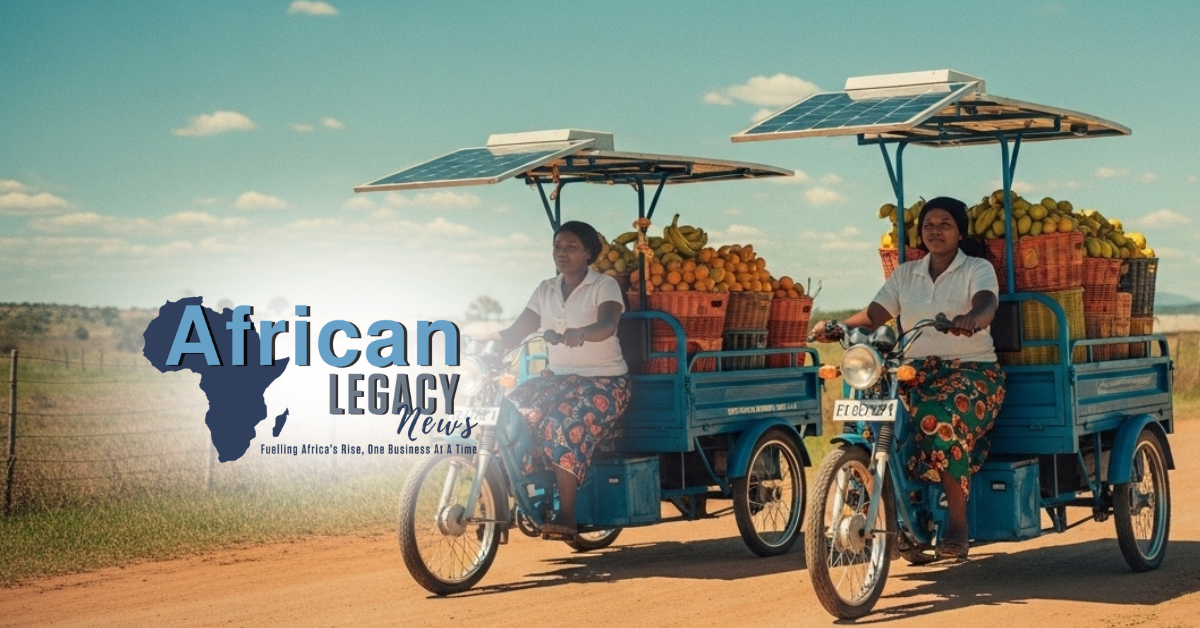
What happens when clean energy, mobility, and gender equality intersect in rural Zimbabwe? For hundreds of women in Wedza district, the answer is life-changing. Through Mobility for Africa’s “Hamba” electric tricycle initiative, women are gaining economic independence, social respect, and new avenues for entrepreneurship, all powered by solar-powered charging stations.. This is a story not simply of transport, but of dignity, inclusion, and empowerment.
The Context & The Problem
- Rural Zimbabwe’s women have long borne the burden of distance, walking heavy loads of crops, water, or firewood across rugged terrain, often unable to access remote homesteads or markets reliably.
- Traditional gender norms often exclude women from public transport services and income-earning opportunities in transport or delivery sectors.
What Is “Hamba” & How It Works
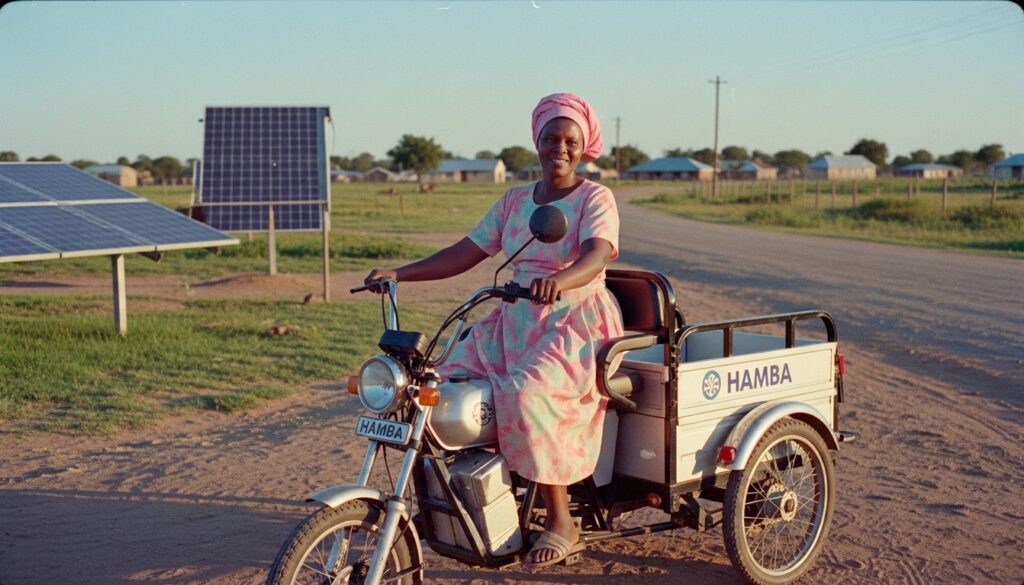
- “Hamba” (Ndebele for “Go”) is an electric tricycle model initiated by Mobility for Africa. The vehicles use lithium-ion batteries that are charged at community solar stations.
- Women pay about US$15 per month in group lease arrangements; individual ownership via lease-to-purchase is now possible for some.
- Battery swapping after about 100 km costs approximately US$1.
Impacts & Transformations
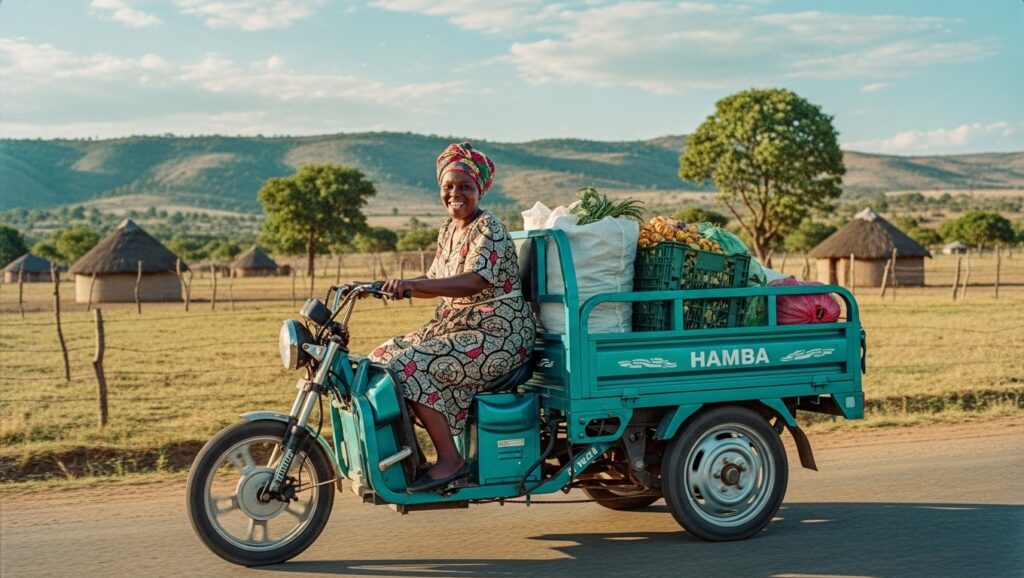
- Income & Livelihoods: Women like Anna Bhobho (31), once excluded financially, now deliver crops, transport passengers, run small businesses, and earn up to US$300 / month.
- Social Status & Decision-making: Ownership has changed household dynamics. Women report gaining respect in households, being included in financial decisions, and having greater self-esteem.
- Improved Access & Utility: These tricycles serve multiple roles transporting produce to market on time, bringing the sick or pregnant to clinics, delivering groceries, moving building material, reducing time and risk for women and children.
Challenges
- Infrastructure & Terrain: Rough rural roads, heavy rains, and unmaintained paths limit speed and safety. Some routes are inaccessible for motor vehicles but still challenging even for tricycles.
- Social Resistance: In some communities, there remains resistance to women leading in what were formerly male domains. Skepticism or social pressure can pose obstacles.
- Maintenance, Battery & Cost Sustainability: While battery swaps are affordable for some, long-term maintenance, charging infrastructure, and scaling leasing or purchase agreements across more remote zones will require investment.
Prospects & Strategic Outlook
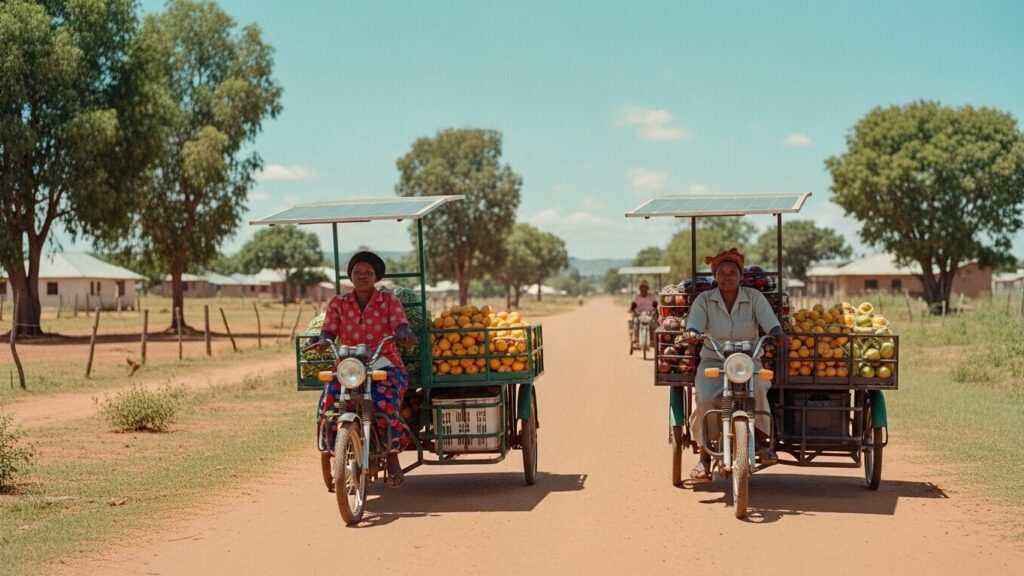
- Scaling Reach: With approx. 300 women already benefitting in Wedza, increasing reach into other districts with similar terrain and social contexts is possible.
- Clean Energy Mobility as Development Strategy: Electric tricycles, charged at solar stations, provide a low-emission alternative to fuel-dependent transport. This model reduces rural isolation and contributes to sustainable development outcomes.
- Women’s Economic Empowerment & Gender Equality: As women accumulate assets and incomes, their bargaining power, leadership in families and communities, and ability to invest in education and health gains traction.
The journey on the road to equality may be long, but for women in rural Zimbabwe, “Hamba” is more than a tricycle, it’s a vehicle of change. Mobility, access, and clean energy combined are not only shifting who holds power, but how whole communities think about what’s possible.