


In an era of climate urgency and industrial reinvention, one South African start-up is showing how home-grown innovation can scale global impact. SeaH4, headquartered in Cape Town, claimed the top prize at the 2025 ClimateLaunchpad Global Grand Final. A competition spanning 40 countries and more than 2,700 applications.
But the significance of SeaH4’s win extends beyond the €10,000 prize. It signals an industrial and sustainability shift for Africa, where climate tech meets economic growth, and where innovation born in the Global South is positioned to lead global decarbonisation.
A New Chapter for African Cleantech
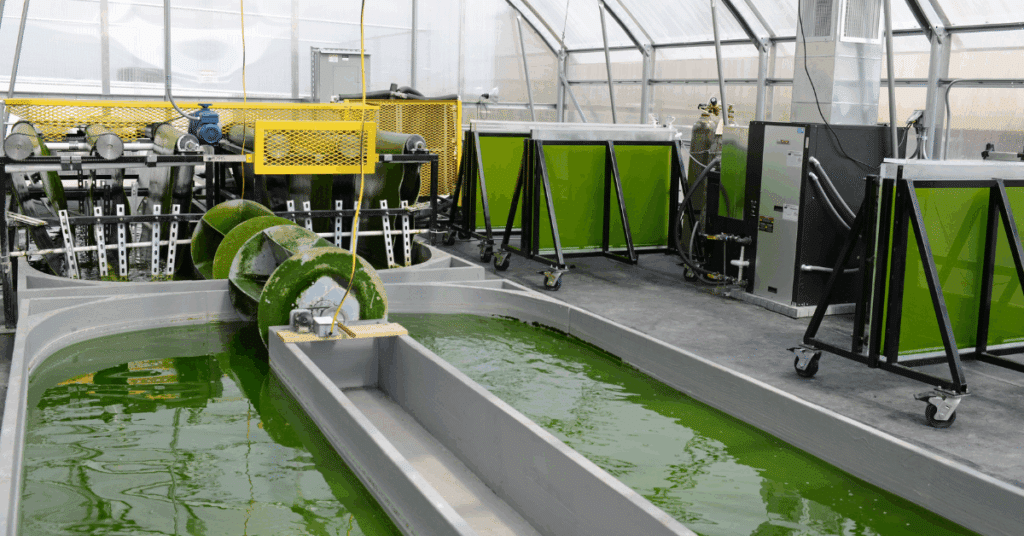
SeaH4’s breakthrough is anchored in a novel algae-based fuel system designed to power marine vessels and aviation without requiring engine redesign.
Its business model is ambitious: it leverages micro-algae cultivated in saline systems, uses CO₂ from industrial emitters, and feeds into a value chain that replaces fossil-based fuels while creating jobs in coastal and rural communities.
This win places Africa not as a passive recipient of global technology, but as a creator of climate-solutions with export power. For African policymakers and business leaders, the takeaway is clear: the continent can be a hub of sustainable industrial ingenuity, not merely a site of natural-resource extraction.
What the Win Means: Strategy, Scale & Impact
1. Validation of a scalable model
SeaH4’s success in Vienna did more than reward an idea, it validated a model that links climate-tech, manufacturing, and industrial deployment. With a jury decision that emphasised “solutions ready to scale,” the company cleared a key credibility barrier.
For Africa’s industrial investors, this kind of validation is the green-light: that climate tech can move into measurable commercial deployment, not just pilot-phase showcase.
2. Local value-creation and global relevance
The SeaH4 model situates itself at the intersection of low-carbon fuel production and localised manufacturing. The process can be co-located with coastal emitters, involves rural employment and can be replicated globally.
This aligns with the African Legacy News trait of celebrating innovation that lifts communities and creates industrial strength, not just technical novelty.
3. Africa’s ecosystem momentum
This win adds to growing evidence that Africa’s start-up ecosystems are chiselling out leadership in climate and industrial innovation. SeaH4 stands among the first wave of “climate-tech exporters” from the continent meshing entrepreneurship with industrialisation.
For shareholders, policymakers and corporate partners in Africa, the message is tangible: collaboration with local innovators is no longer optional, it’s strategic.

Risks, Realities & the Road Ahead
The promise is compelling but the path is not without challenge. Key considerations include:
-
Capital and scale: Transitioning from prize-winner to full industrial deployment demands large-scale funding, infrastructure and regulatory alignment.
-
Market-integration: To replace fossil fuels in marine & aviation sectors, SeaH4 must navigate certification regimes, supply-chain complexity and established legacy ecosystems.
-
Sustaining localisation: As the company scales, ensuring that local job creation and community impact keep pace with growth remains vital both for credibility and for Africa’s structural development.
Yet for African business leaders and policymakers, these challenges are not deterrents, they’re invitations. The same structural gaps that represent risk also signal first-mover opportunity. A South-African company winning a global competition is one thing. That company becoming a cornerstone of a decarbonised value chain across the continent is another and that is the possibility SeaH4 now embodies.
Key Insights for African Legacy News Readers
-
Innovation anchored in Africa matters. SeaH4’s win shows that climate-tech developed in the Global South has both relevance and export potential.
-
Industrialisation and sustainability can be synergistic. The algae-fuel model merges ecological purpose with manufacturing-and-deployment value.
-
Start-ups are strategic partners. For mining firms, energy companies, transport operators in Africa, collaborating with innovators like SeaH4 is not just CSR, it’s competitive.
-
Ecosystem momentum is emerging. The win reflects broader patterns: African start-ups are graduating from idea-phase to world-class industrial-players.

SeaH4’s victory in Vienna is more than a trophy, it’s a signal. It tells African businesses, investors and governments that the continent is stepping onto the global climate-tech stage with assets to offer, not only needs to address. For African Legacy News readers, the lessons are clear: industrial transformation, climate leadership and economic inclusion are not separate threads, they are one fabric. South Africa’s algae-fuel start-up may be small today, but it points to an Africa ready to lead tomorrow.